Introduction: Why Model Units & Showrooms Matter
In today’s competitive multifamily market, model units and leasing showrooms play a critical role in shaping first impressions and accelerating leasing velocity. These spaces are often the first physical touchpoints prospective residents experience, setting expectations for the property’s lifestyle, quality, and overall standards. Well-presented, furnished environments help prospects emotionally connect with the space, moving them beyond square footage and floor plans toward envisioning daily life in the residence.
Furniture, in this context, functions as a sales and storytelling tool, not decoration. Thoughtfully furnished model units guide traffic flow, establish scale, and reinforce brand positioning. For property managers and developers, furniture leasing offers a strategic way to activate these spaces quickly and consistently, ensuring every tour reflects the property’s intended market positioning.
Table of Contents
- What Furniture Leasing Means for Property Managers
- Common Use Cases: Where Leasing Is Applied
- What’s Typically Included in a Model Unit Lease
- How Leasing Supports Faster Pre-Leasing & Tours
- Consistency Across Multiple Units & Properties
- Turnkey Furniture Leasing: Speed, Execution & Refresh
- Why Property Managers Choose Leasing Over Ownership
- How This Fits Into Corporate Housing & Leasing Strategy
- Turnkey Furniture Leasing for Model Units by Relics
What Furniture Leasing Means for Property Managers
Furniture leasing for model home units and showrooms is a temporary, flexible furnishing solution designed specifically for marketing and leasing environments. Unlike permanent furniture ownership, leasing allows properties to furnish units for defined periods, supporting lease-up, pre-leasing, or ongoing marketing needs without committing to long-term assets.
This approach differs from purchasing furniture, which requires storage, maintenance, and eventual replacement. It also differs from event staging or interior design services, which are typically short-term or decorative in nature. Furniture leasing focuses on livable, functional environments that accurately represent how a unit feels when occupied, while remaining adaptable as property needs evolve.
Common Use Cases: Where Leasing Is Applied
Furniture leasing is most commonly applied where speed, presentation quality, and flexibility are critical to leasing performance. For property managers and developers operating in luxury and Class A multifamily environments, leasing allows teams to activate spaces quickly while maintaining a consistent, market-ready standard across every showing. Rather than treating furniture as a fixed asset, leasing positions it as a strategic tool that supports leasing goals at different phases of a property’s lifecycle.
Common applications include:
Model units for new developments
Fully furnished model units help translate architectural plans and finish schedules into a tangible, walkable experience for prospective residents. Furniture establishes scale, flow, and livability, allowing prospects to connect with the space emotionally well before full occupancy.
Pre-leasing showrooms
Leasing offices and early preview units benefit from furnished layouts that set expectations for the overall community experience. These environments reinforce brand positioning and create a polished first impression even before permanent residents move in.
Vacant luxury apartments
Empty units can feel smaller, less inviting, or difficult to visualize during tours. Furnishing these spaces helps prospects visualize the layout’s potential and lifestyle fit, keeping the focus on the residence’s quality rather than on the lack of context.
Temporary furnished units during turnover
During unit transitions, furniture leasing supports continuity in leasing operations without disrupting tour schedules. Furnished presentations allow properties to continue showing units while preparing them for long-term occupancy.
Units shown to corporate or relocation clients
Corporate renters and relocation prospects often expect fully furnished, move-in-ready environments that reflect professional standards. Leasing enables properties to meet these expectations without permanently dedicating furniture to a single unit type.
Across all these scenarios, furniture leasing eliminates the operational complexity of sourcing, installing, storing, and ultimately removing furnishings. For property teams focused on leasing velocity, brand consistency, and portfolio-wide execution, leasing provides a controlled, adaptable solution that aligns presentation with performance.
What’s Typically Included in a Model Unit Lease
A model unit furniture lease is designed to balance livability, scale, and presentation, ensuring each space feels intentional, functional, and easy to understand during a tour. While furnishing packages are tailored to individual floor plans and target resident profiles, most include a consistent set of core elements that help prospects visualize how the apartment supports day-to-day living.
Sofas and lounge seating
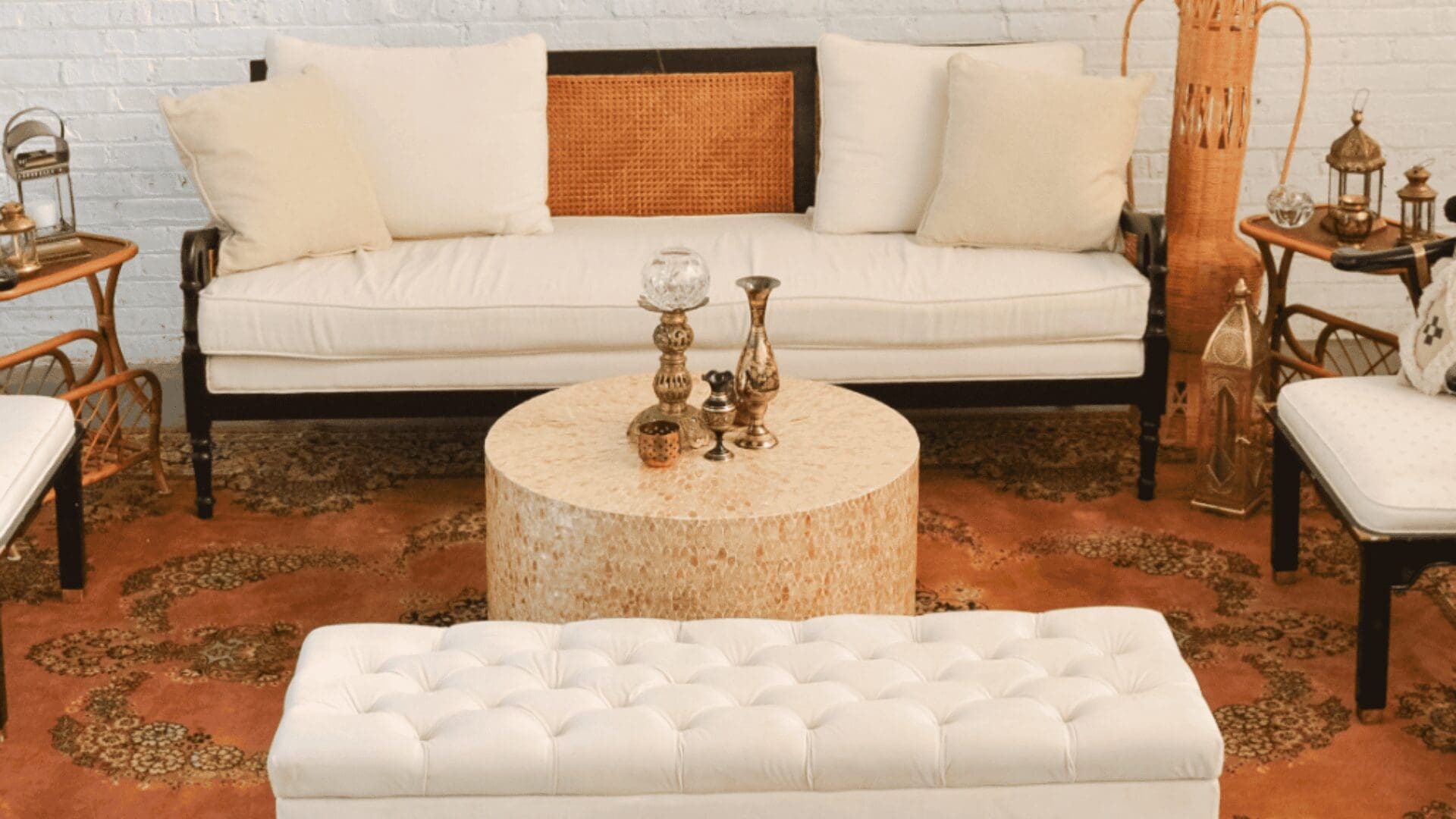
Lounge seating anchors the living area and establishes how residents can comfortably use the space for relaxing or entertaining. Properly scaled seating also helps prospects understand room proportions and traffic flow.
Coffee and side tables
These pieces (coffee and side tables) reinforce functionality in the living area by showing where everyday items naturally belong. They also help define conversational groupings and create a sense of completeness within the space.
Dining tables and chairs
Dining furnishings clarify how meals, work, or social moments can fit within the floor plan. Their size and placement illustrate how the dining area connects to adjacent living or kitchen spaces.
Beds and mattresses
Beds establish the bedroom as a true retreat and demonstrate appropriate furniture scale within the room. Including a complete sleep setup helps prospects immediately assess comfort, layout, and circulation.
Bedside tables
Nightstands enhance the bedroom’s livability by providing practical surface space for personal items. They also help visually balance the room and define usable wall and walkway clearances.
Lighting for living, dining, and bedrooms
Layered lighting ensures the unit feels warm, functional, and move-in ready during tours. It also helps prospects understand how each space transitions from daytime use to evening living.
Minimal artwork to support, not overpower, the space
Artwork is used sparingly to add visual interest without distracting from architectural features or finishes. The goal is to enhance presentation while keeping the focus on the unit itself.
Office area furnishings, such as a desk and desk chair (where applicable)
In units with flexible layouts, an office setup demonstrates how the space can accommodate remote work or study. This helps prospects envision alternative uses without compromising the primary living areas.
Together, these elements work cohesively to establish proportion, flow, and clarity throughout the unit. By presenting a fully furnished yet neutral environment, model-unit leasing allows prospective residents to focus on how the apartment fits their lifestyle rather than on how to provide it themselves.
How Leasing Supports Faster Pre-Leasing & Tours
Furnished model units consistently outperform unfurnished spaces when it comes to leasing momentum. By presenting a complete environment, furnished units help prospects immediately understand how the space can be used, reducing hesitation and uncertainty during tours.
Furniture leasing also supports high-quality marketing photography and virtual tours, which are increasingly crucial for remote leasing and pre-arrival decision-making. A well-furnished unit elevates perceived value, reinforces professionalism, and supports smoother, more confident leasing decisions, particularly during early-stage lease-up.
Consistency Across Multiple Units & Properties
For operators managing multiple units or properties, consistency is essential. Furniture leasing enables standardized furnishing packages that adhere to brand guidelines across the entire portfolio. This consistency ensures that every model unit or showroom delivers the same visual and experiential message, regardless of location.
Relics Rentals works with property managers to scale furnishing solutions across buildings and markets, supporting cohesive presentation while allowing for flexibility based on unit type or target demographic.
Turnkey Furniture Leasing: Speed, Execution & Refresh
Turnkey furniture leasing simplifies the entire furnishing process by consolidating planning, sourcing, and execution into a single, coordinated workflow. At Relics, this begins with space assessment and layout planning, followed by furnishing selection aligned with the property’s positioning and target resident profile. Professional installation ensures units are tour-ready without delay, while flexible lease durations accommodate shifting development and leasing timelines.
As properties evolve, furnishings can be refreshed or rotated to keep model units current and aligned with market expectations. This adaptability allows property teams to update presentations as floor plans, finishes, or branding change, without interrupting leasing operations. At the end of a lease term, furniture is removed seamlessly, allowing teams to transition spaces without storage or asset management concerns.
The turnkey nature of furniture leasing delivers meaningful operational benefits for property managers and developers. By working with a single furnishings partner, teams reduce internal coordination, eliminate vendor fragmentation, and maintain consistent quality across every unit. This streamlined approach supports faster activation, cleaner execution, and greater confidence that every furnished environment reflects the property’s standards from first showing through stabilized occupancy, whether for short-term or long-term rentals.
Why Property Managers Choose Leasing Over Ownership
Property managers often choose leasing over ownership to maintain flexibility during the lease-up and stabilization phases. Leasing allows teams to refresh model units as floor plans, finishes, or target audiences change, without being locked into permanent assets.
It also eliminates the need to store, resell, or dispose of furniture once it is no longer needed. For properties adapting to market conditions or evolving resident profiles, leasing provides the agility that ownership cannot.
How This Fits Into Corporate Housing & Leasing Strategy
Model unit and showroom furniture leasing is closely tied to broader corporate housing and temporary furnished living strategies. Many of the same principles, flexibility, presentation, and readiness, apply to executive housing and relocation units.
Within a comprehensive leasing approach, furniture leasing supports both marketing environments and lived-in furnished residences. For a deeper look at how this strategy applies in the short and long term, explore Relics’ pillar page on Corporate Housing Furniture Leasing.
Turnkey Furniture Leasing for Model Units by Relics
Relics Rentals partners with property managers, developers, and asset teams to deliver refined, ready-to-show environments that support leasing goals. From single-unit models to multi-property rollouts, our team provides turnkey furniture leasing solutions tailored to model home and luxury apartment communities.
As a long-term partner, Relics brings expertise in both presentation-driven model units and fully furnished leasing environments, helping properties activate spaces, maintain brand consistency, and present at market-ready standards throughout every phase of the leasing lifecycle.
Relics Rentals | Milwaukee, WI
(262) 227-3003
[email protected]